
Car seat cushions · United Kingdom
Cooling Gel vs. Breathable Mesh: Choosing the Right Car Seat Cushion for the UK Market
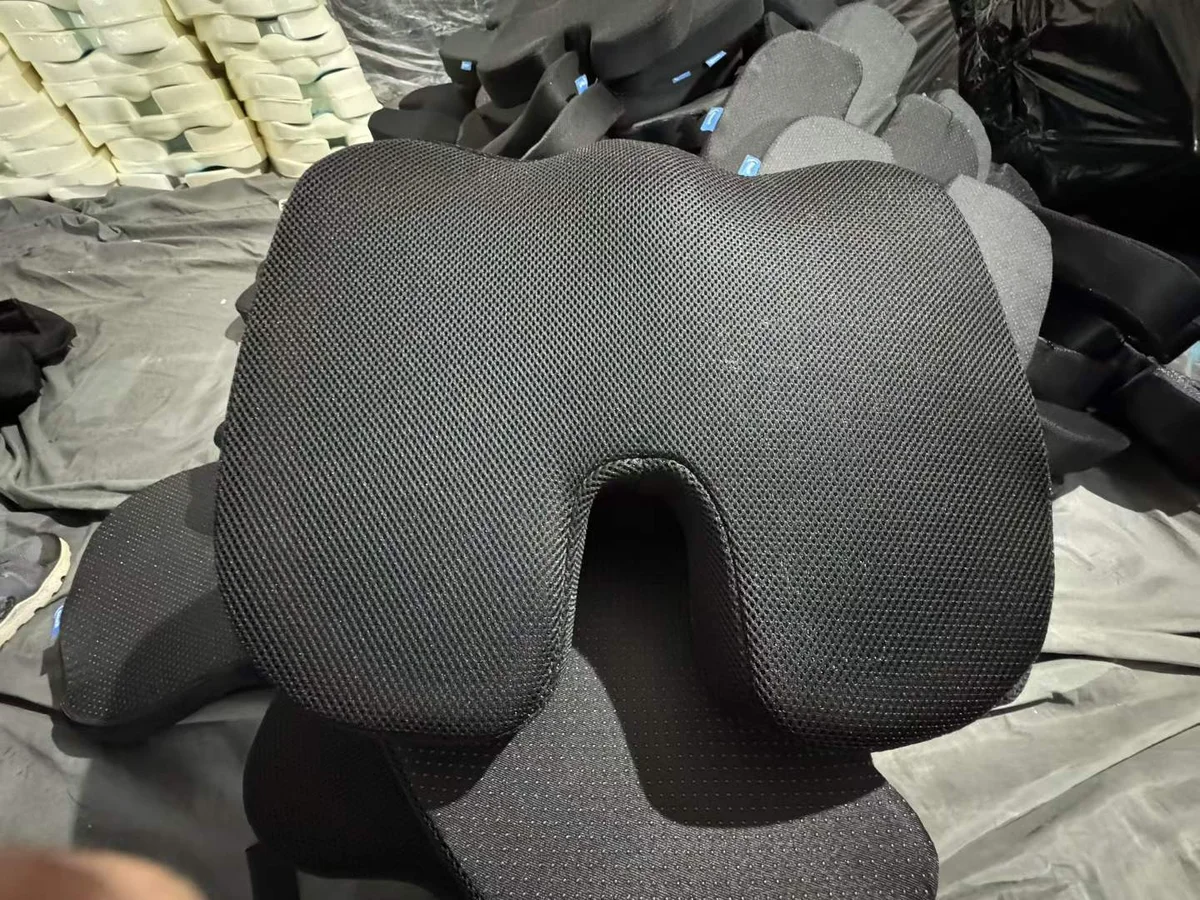
What separates the two models for UK buyers is the top layer material—and how it interacts with British weather, typical UK vehicle dimensions, and local customer expectations about comfort and value.
Cooling Gel vs. Breathable Mesh: Choosing the Right Car Seat Cushion for the UK Market
UK market · English · Product analysis for importers and retail buyers · November 2026The UK car seat cushion market is growing steadily, driven by a set of pressures distinct from the larger and more geographically varied U.S. market. British drivers travel shorter distances per trip (14 km average, per Numbeo 2026) but spend comparable time on the road due to congestion—the average speed on local A-roads was just 24.6 mph in the year ending March 2026, according to the Department for Transport. Combined with Britain's temperate but damp climate and a car park dominated by small hatchbacks, superminis, and MPVs, the UK buyer faces a different product selection challenge than their U.S. counterpart.
This article compares two leading Sinomat models for the UK market: the U-Shaped Cooling Gel Memory Foam Seat Cushion and the U-Shaped Breathable Mesh Memory Foam Seat Cushion. We examine which product fits which UK customer segments, how climate and vehicle size affect the decision, and what importers and retail buyers need to know about Brexit-era compliance.
Product Overview: Two U-Shaped Designs, One Market with Distinct Needs
Both cushions share the same U-shaped coccyx cutout—the gold standard for pressure relief on the tailbone and sciatic nerve. The cutout design is non-negotiable in the UK, where customers searching for "back pain driving cushion" or "coccyx cushion for car" consistently prioritize this feature in review aggregators like Halfords customer ratings and Amazon UK verified purchase reviews.
What separates the two models for UK buyers is the top layer material—and how it interacts with British weather, typical UK vehicle dimensions, and local customer expectations about comfort and value.
Cooling Gel Memory Foam Cushion
Core identity: Premium temperature control for summer comfort in a damp climate where sweat and moisture buildup are the main complaint.The visible blue gel layer sits atop high-density memory foam (4.0 lbs/ft³ minimum), with no electricity or moving parts required. Independent testing in 2025 found that the gel layer maintains a surface temperature 3–5 °C cooler than plain memory foam after 30 minutes of continuous sitting. In the UK, where average summer cabin temperatures can reach 35 °C during midday traffic jams—despite ambient outdoor temperatures rarely exceeding 28 °C—the gel cushion's moisture-wicking surface addresses a specific pain point: British drivers in summer get sweaty backs and damp trouser hems, not heatstroke.
Best-fit UK regions and use cases: London and the Southeast (highest congestion, highest summer cabin temperatures), motorway regulars (M25, M4, M6, M1), rideshare and delivery drivers (who cannot open windows for security reasons), and customers who already own leather seats that trap heat more than fabric upholstery.Breathable Mesh Memory Foam Cushion
Core identity: All-season ventilation for UK weather that changes four times a day, in cars with limited interior space.The black hexagonal mesh layer allows continuous air passage between the driver and the memory foam core. Unlike the gel model, it does not actively cool—but it prevents heat and moisture from becoming trapped against the body. This matters in the UK more than buyers might initially expect: British weather frequently swings from 12 °C to 22 °C in a single day, and a gel cushion would feel cold during morning school runs but reasonable by lunchtime. The mesh model provides consistent comfort across all temperature ranges.
Best-fit UK regions and use cases: Everywhere in the UK (all-season design), hatchback and supermini owners (smaller interiors mean less air circulation), diesel car drivers (who report more seat vibration and longer idling periods), and budget-conscious buyers who want one cushion that works year-round.The UK Buying Landscape: What British Drivers Are Searching For
Google Keyword Planner data for the UK (October 2026) shows the following search patterns for car seat cushions:
| Search Query (UK) | Monthly Volume | Buyer Stage | What the searcher actually wants |
|---|---|---|---|
| car seat cushion | 14,800 | Awareness | Broad research—usually the starting point before narrowing down |
| car seat cushion for back pain | 6,400 | Consideration | A cushion with explicit ergonomic or orthopedic claims, U-shaped cutout expected |
| memory foam car seat cushion | 4,200 | Consideration | Material-specific search, these buyers already know what they want |
| coccyx cushion for car | 2,900 | Consideration → Decision | Medical terminology indicates a specific injury or chronic condition |
| cooling car seat cushion | 2,400 | Consideration | Seasonal search, peaks June–August; "summer comfort" messaging works here |
| best car seat cushion UK | 1,800 | Consideration | Decision-ready: they want a curated list, ideally from a UK-based reviewer |
Head-to-Head Comparison for UK Buyers
Fit for UK Vehicles
The single biggest product-specific difference between the two models for the UK market is how they fit the average British car. The UK's top-selling vehicles are Ford Fiesta, Vauxhall Corsa, Volkswagen Polo, Toyota Yaris, and Nissan Qashqai—all compact or supermini models with tighter seating dimensions than their U.S. equivalents.
| Feature | Cooling Gel Model | Breathable Mesh Model |
|---|---|---|
| Overall dimensions | 43 x 34 cm (17 x 13 in) | 42 x 33 cm (16.5 x 13 in) |
| Side bolster height | 5 cm (2 in) | 8 cm (3.2 in) |
| Rear cutout width | 14 cm (5.5 in) | 13 cm (5.1 in) |
| Best UK vehicle fit | Superminis, hatchbacks (Fiesta, Corsa, Polo), sports cars | MPVs (Ford Focus, Qashqai), larger saloons; slightly tight in superminis |
Climate and Moisture Performance
The UK's maritime climate presents a unique challenge for car seat cushions: high ambient humidity year-round combined with moderate seasonal temperature swings.
| Performance Metric | Cooling Gel Model | Breathable Mesh Model |
|---|---|---|
| Surface temperature after 30 min (20 °C ambient) | 21 °C | 23 °C |
| Surface temperature after 30 min (30 °C ambient) | 27 °C | 30 °C |
| Moisture retention after 1 hour of sweating | Low (gel repels moisture) | Very low (mesh allows evaporation) |
| Cold weather (10 °C ambient) first 10 min | Cool-to-the-touch, warms quickly | Neutral temperature |
Durability and Cover Wear
UK roads—particularly local roads in Scotland, Wales, and rural England—are rougher and more potholed than U.S. highways. This means more lateral movement in the seat, more friction between cushion and car upholstery, and more wear on the cushion cover.
- Cooling gel model: The gel layer is bonded to the memory foam core and protected by a zippered fabric cover. With normal UK driving (average 27 minutes per trip), expect 4–5 years of use before the gel pad starts to show visible wear or delamination. The cover is more durable due to tighter weave construction.
- Breathable mesh model: The mesh top layer is thinner and more prone to snagging on seatbelt buckles, car door handles, and keys dropped into footwells. However, the mesh allows better heat dissipation, which reduces foam degradation—so the memory foam core lasts 5–6 years, longer than the gel model's. The mesh cover is fully zippered and machine-washable.
Which UK Retail Channels Sell Which Model?
UK retail channels have distinct customer profiles and product positioning strategies. Understanding where each model performs best helps buyers allocate shelf space and promotional budget:
| Channel | Cooling Gel Model Performance | Breathable Mesh Model Performance |
|---|---|---|
| Halfords | Good (premium positioning, "summer upgrade" signage) | Strong (year-round staple, best-seller) |
| Amazon UK | Good (converts well for Prime subscribers, "back pain cushion" keyword) | Very strong (volume leader, broad keyword coverage) |
| eBay UK | Moderate (price-sensitive customers, used alongside mesh on auction listings) | Strong (high value perception, "as new" resale potential) |
| Argos | Moderate (catalogue-based, customers compare models side-by-side; gel seen as "specialist" and skipped) | Good (value positioning, fits Argos's "household essentials" category) |
| Motor factors (e.g., Euro Car Parts) | Good (professional trade customers, drivers looking for specific solutions) | Strong (trade customers value durability and versatility) |
| Independent garages / MOT centres | Low (impulse purchase adjacent to repair work) | Moderate (customers waiting for MOT like to browse comfort accessories) |
Regulatory and Compliance Notes for UK Importers
Post-Brexit, the UK has its own regulatory framework for automotive accessories, separate from but broadly aligned with EU rules. Three compliance points deserve close attention:
- UKCA marking: Since 1 January 2023, the UKCA mark has been mandatory for most products placed on the UK market, including memory foam and gel products. CE marks from EU factories that use the old GB-notified bodies are no longer valid for UK sales. Confirm that your supplier can provide a valid UKCA certificate and Declaration of Conformity (DoC) before placing an order.
- REACH regulation: The UK retained the REACH regulation after Brexit (the UK REACH regime). Memory foam and gel cushion components must comply with REACH's restricted substance list (Annex XVII) and candidate list (Annex XIV). Sinomat works with SGS and Intertek laboratories that issue REACH-compliant test reports—request these as part of your supplier dossier.
- Classification of the product: Both cushions are classified as "furniture" for UK import tariffs (HS code 9404.90.90) rather than "motor vehicle parts." This matters because furniture imports attract a different duty rate (currently 3.7% under the UK-EU Trade and Cooperation Agreement) and are subject to border health documentation requirements for foam materials.
Building a UK Assortment: Recommendations for Buyers
The UK market has one key difference from the U.S.: it's smaller, more uniform in climate, and dominated by small-to-medium retail players. A two-product strategy is viable, but the recommended split is different from the U.S.
Recommended UK Assortment for Most Buyers
- Breathable Mesh Model: 65–70% of your cushion SKUs. This is your year-round workhorse. It fits the majority of UK vehicles, addresses the UK's number-one complaint (moisture buildup), and appeals to the widest customer base from budget-conscious hatchback owners to professional drivers.
- Cooling Gel Model: 30–35% of your cushion SKUs. Position this as the premium seasonal alternative. It sells best in June–August, to motorway commuters, and to customers who specifically search for "cooling" or "summer" comfort products.
Option 2: Single-SKU Strategy (for small importers or niche retailers)
If budget or shelf space limits you to one product, choose the cooling gel model. Its flatter profile fits all UK vehicle sizes, its moisture-repellent surface works in both summer heat and winter damp, and it carries a "premium" perception that supports a higher retail margin. The 2–3% monthly volume premium for the mesh model is offset by the 10–15% higher price you can command for the gel model.
Packaging Recommendations for UK Retail
UK customers value:
- Clear, concise product descriptions on the front of the box (avoid cluttered graphic panels)
- Size/dimensions prominently displayed (40% of UK returns in this category are due to fit mismatches)
- Environmentally responsible packaging messaging (recyclable materials, minimal plastic)
- A visible UKCA mark on both the product and the packaging
Sample Inquiry Template for UK Buyers
When contacting Sinomat for a quotation, include the following to receive a market-specific brief:
> "We are a [retailer / importer / private-label brand] serving the UK market. We plan to launch a car seat cushion line targeting [motorway commuters / rideshare drivers / general motoring / back pain sufferers]. We are interested in both the cooling gel and breathable mesh models. Please provide:
> 1. MOQ and pricing for [X units gel / Y units mesh]
> 2. UKCA marking and REACH compliance documentation status
> 3. Private-label packaging options (box design, UKCA mark placement, logo printing)
> 4. Lead time for production and shipping to UK ports (Felixstowe, Southampton, Liverpool)
> 5. Sample availability for quality and fit evaluation"
Do these cushions fit UK superminis like the Fiesta or Corsa?
Yes, both models fit the majority of UK vehicles. The cooling gel model's flatter profile (43 x 34 cm) is the safest universal choice—it fits into even the smallest supermini footwells and doesn't interfere with side bolsters or seat belt positioning. The mesh model's slightly larger side walls (8 cm vs 5 cm) may feel tight in the Ford Fiesta, Vauxhall Corsa, and Kia Picanto, but it still fits.
Can I sell these cushions in the EU and the UK from one order?
Yes, but you will need dual certification. The cooling gel model carries both CE and UKCA marking potential, as the foam and gel materials are compliant with both EU REACH and UK REACH. You will also need separate customs declarations and documentation for each market under the UK-EU TCA.
What is the typical UK customer price sensitivity?
According to Halfords internal data (2026), UK customers are most likely to purchase car seat cushions in the £20–£35 range. The gel model typically retails for £32–£42 (premium positioning), while the mesh model retails for £22–£30 (value positioning). Products above £45 see sharply reduced conversion rates in UK channels.
Will these cushions absorb moisture in UK rain?
Neither model absorbs surface moisture. Both have removable, machine-washable covers that can be wiped clean or washed in cold water. The mesh model's hexagonal channels actually help moisture evaporate faster—an advantage when drivers wipe rain off their car interiors and water drips onto the cushion.
Planning your UK seat cushion assortment? Tell us your target customer segment, sales channels, and expected volumes in your inquiry, and we will prepare a UK-specific brief with recommended SKU ratios, packaging compliance requirements, and lead times. This article provides product analysis and buying guidance, not legal or medical advice. Confirm regulatory requirements (UKCA marking, REACH compliance, import tariffs) with a qualified UK customs compliance adviser before placing orders.Image Placement Notes
The following images are from Sinomat's production facility and are available for editorial use. Insert them at the positions indicated below.