
Wiper blades · Ecuador / Latin America
Too Many Wiper SKUs, Too Much Slow Stock: A Better Multi-Adapter Strategy
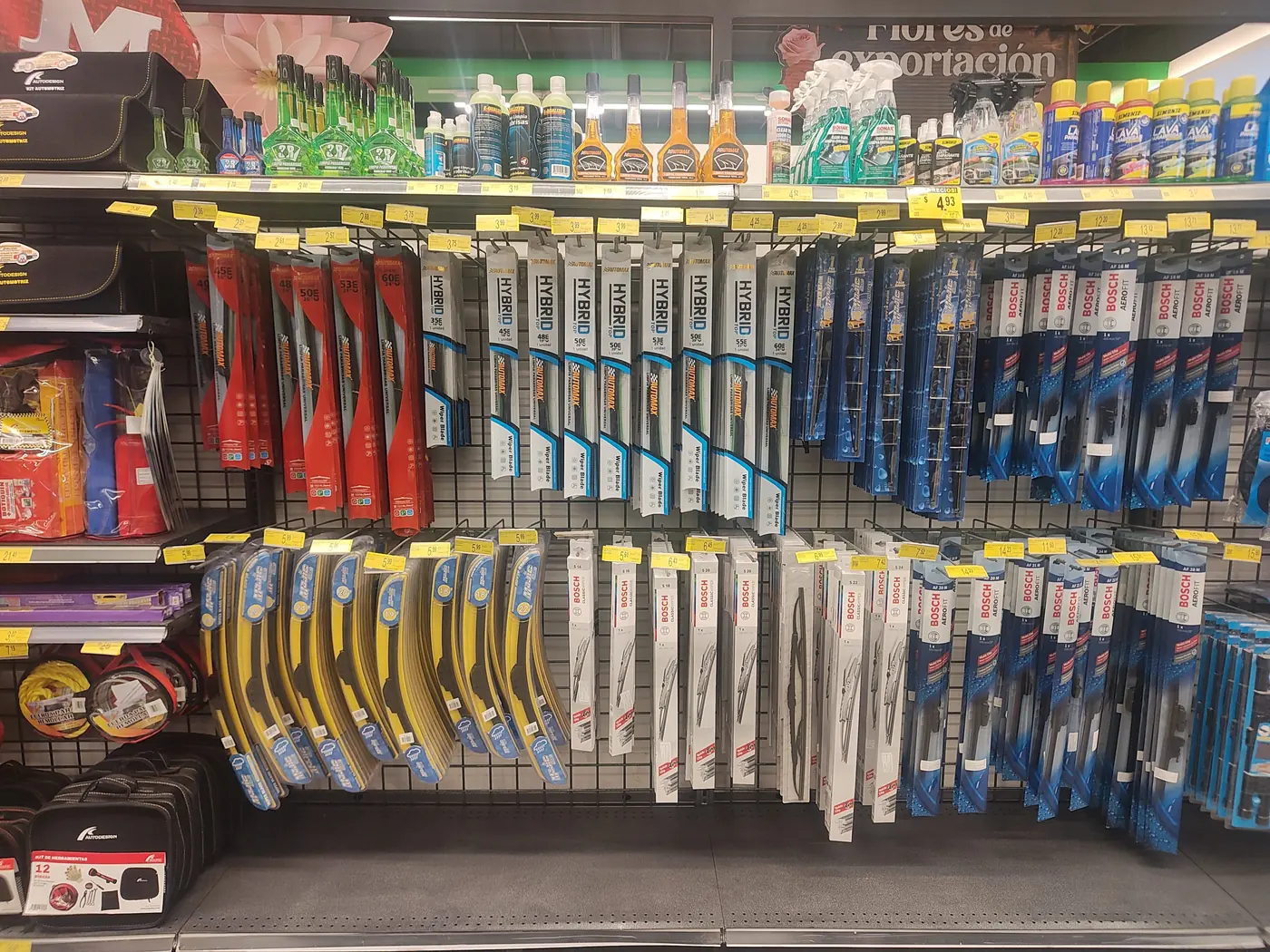
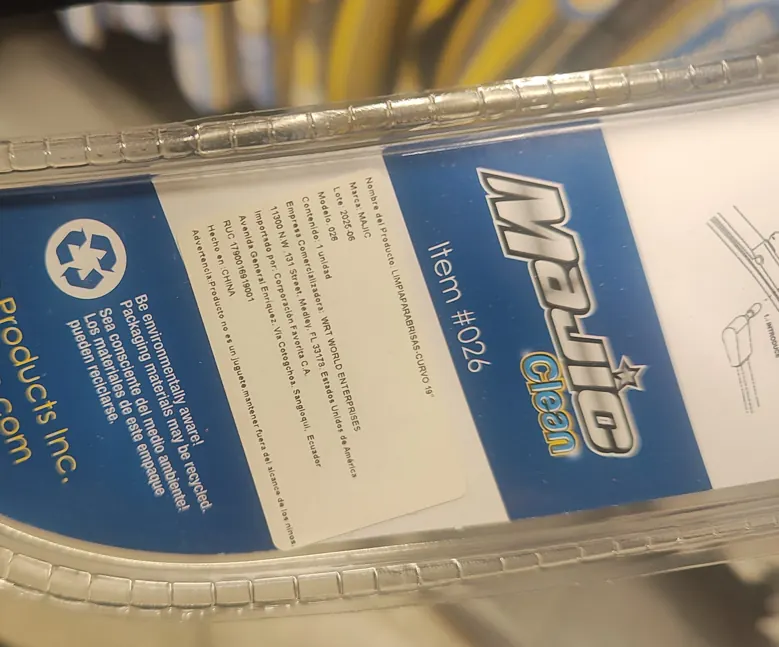
In April 2026, during a market visit in Ecuador, we saw vehicle-specific wiper blades produced in 2025 still sitting unsold. One shelf cannot represent an entire national market, but it exposed a familiar inventory problem: when every connector and vehicle application becomes a separate SKU, demand fragments faster than stock can move.
For importers, wholesalers and retailers, a well-planned multi-adapter wiper range can remove avoidable connector-specific duplication, pool demand into faster-moving core lengths and make replenishment easier. The important limit is simple: multi-adapter does not mean “fits every vehicle.” Blade length, arm interface and a verified application list still matter.
Field evidence: Sinomat market observation, Ecuador, April 2026. The observation is presented as one retail example, not a national inventory statistic.
The hidden cost is not only the unsold blade
A vehicle-specific range can look precise on a spreadsheet. In daily operations, each connector-and-length combination creates another forecast, purchase quantity, carton allocation, shelf position and replenishment decision.
When one application sells slowly, cash remains tied up after freight, duty and handling have already been paid. The product continues to occupy warehouse and retail space. It may later require a markdown, a transfer between branches or a write-off, while a faster-moving size can still run out.
The more useful buying question is not “How many models can we list?” It is “How much real demand can each stocked SKU collect?”
What a multi-adapter range changes
A multi-adapter wiper combines one blade platform with a selected connector set for compatible wiper arms. This can remove part of the interface duplication from the range without pretending that all vehicles use the same blade.
| Assortment issue | Vehicle-specific approach | Multi-adapter approach |
|---|---|---|
| Connector coverage | Separate items may be needed for different arm types | One blade SKU can cover several validated arm types through included adapters |
| Demand | Split across narrow applications | Pooled by blade length across compatible applications |
| Replenishment | More low-volume lines to forecast | A smaller core range can be reviewed more frequently |
| Main risk | Slow-moving or obsolete application stock | Wrong-adapter selection when fitment information is weak |
This is SKU consolidation, not blind SKU reduction. Different blade lengths still require stock, and some arm designs or rear-wiper applications need dedicated products.
Why the range can move more efficiently
Demand is concentrated into the core lengths
If several compatible arm types use the same blade length with different adapters, their demand can be served by one stocked blade SKU. The buyer can then place deeper stock behind proven lengths and keep long-tail applications as dedicated or special-order lines.
Replenishment is easier to control
A compact core range is easier to count, reorder and move between branches. Buyers can review sell-through by length instead of interpreting many small connector-specific lines. The design itself does not guarantee faster turnover; the result must be checked against real sales.
Packaging closes the fitment gap
The package should show the included adapters, supported arm types, blade length, installation steps and a route to the current application guide. If the customer cannot identify the correct adapter quickly, the inventory benefit can be offset by returns and support costs.
What a 200,000-piece European retail program taught us
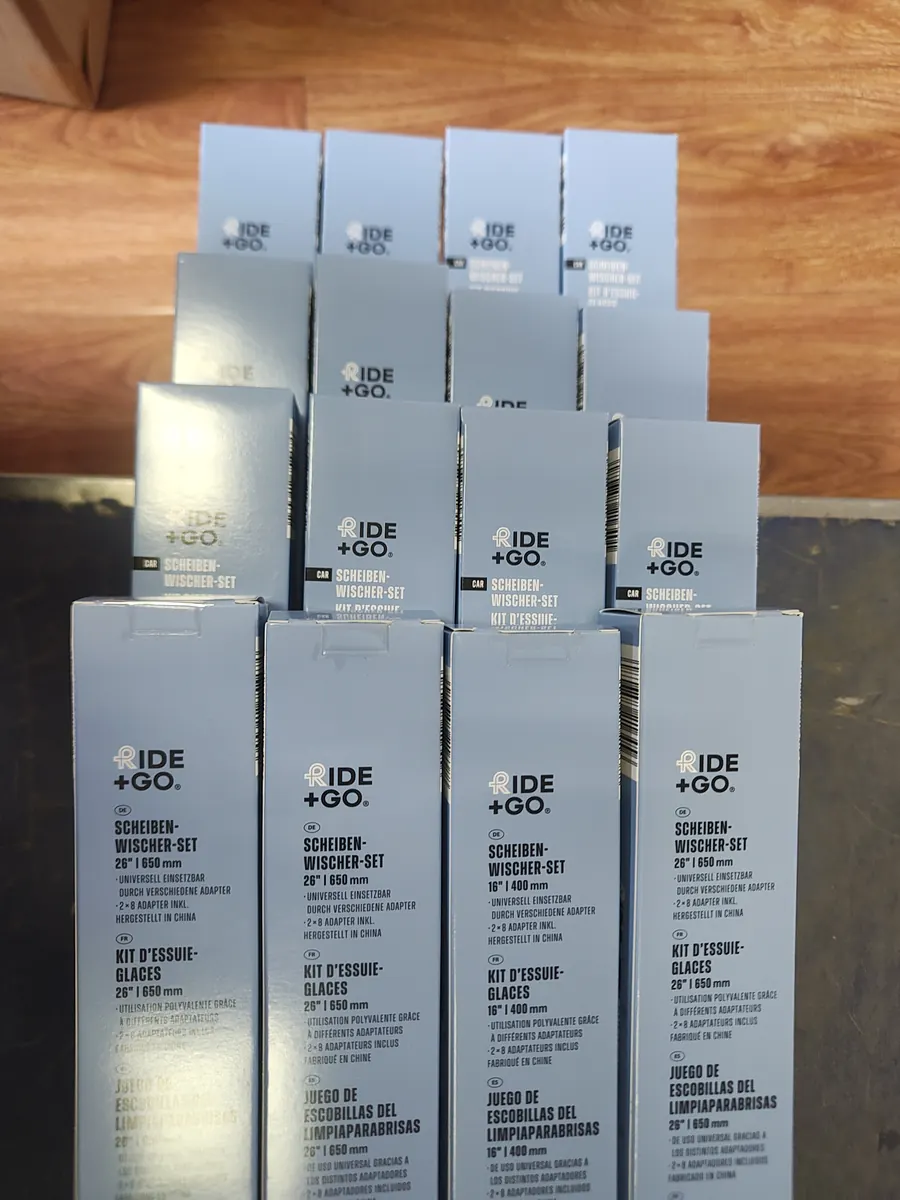
In 2026, Sinomat supplied 200,000 wiper blades for a European ALDI supermarket program. At that volume, the blade is only one part of the buying decision. The size mix, interface plan, packaging instructions, shelf presentation and carton allocation must be settled before production.
The order volume does not prove that one assortment will sell equally well in every country, and it is not evidence of a specific inventory saving. It shows why range architecture matters at mass-retail scale: a small planning error is repeated across thousands of pieces.
For an Ecuadorian or regional Latin American buyer, the useful lesson is to start with the local vehicle mix and sales channel rather than copy a European size curve.
A practical buying plan
- Rank current wiper sales by blade length and identify ageing stock.
- List the arm types and vehicle applications that generate the most demand or customer questions.
- Ask for a blade-length and adapter matrix plus a verified application list.
- Check installation instructions, individual packaging and master-carton data.
- Test samples on the intended arm types before approving production.
- Pilot the range and compare sell-through, stockouts, returns and adapter-related questions.
Do not remove every vehicle-specific blade at once. Keep dedicated products where fitment, rear-wiper design or proven sales justify them.
FAQ
Do multi-adapter wiper blades fit every vehicle?
No. A multi-adapter blade works with several validated arm interfaces, but the blade length, connector and vehicle application must still be confirmed.
How can multi-adapter wipers reduce inventory cost?
They can consolidate connector-specific variants into a smaller number of blade-length SKUs. The actual saving depends on the local vehicle mix, sales pattern, order quantities and packaging.
What should appear on the package?
Show the blade length, included adapters, supported arm types, installation steps and a route to the current application guide. Avoid an unsupported “fits all vehicles” claim.
Should a buyer replace the entire vehicle-specific range?
Not necessarily. A hybrid range can use multi-adapter blades for higher-volume front applications and retain dedicated products where fitment or sales data supports them.
Turn your SKU list into a quotation plan
Send us your current wiper SKU list, top vehicle applications and target price tier. We can compare the existing mix with a multi-adapter option and prepare a focused assortment and quotation proposal covering blade lengths, adapter configuration and packaging direction.
If you prefer to start smaller, request a sample set for your most common arm types and evaluate the installation before discussing a full order.
Request a multi-adapter wiper quotation →Related sourcing pages: Wiper blades · Build a sourcing brief · Request a range proposal